Eastside Stories: The Points Communities

No. 4 | March 20, 2019

Eastside Stories
Eastside Stories is our way of sharing Eastside history through the many events, people places and interesting bits of information that we collect at the Eastside Heritage Center. We hope you enjoy these stories and share them with friends and famil…

Eastside Stories is our way of sharing Eastside history through the many events, people places and interesting bits of information that we collect at the Eastside Heritage Center. We hope you enjoy these stories and share them with friends and family.

The Points Communities

A visitor to the Eastside, headed across the SR-520 bridge toward Kirkland, Redmond or Bellevue will first cross through four small cities: Medina, Hunts Point, Yarrow Point and Clyde Hill. While the large Eastside cities have populations numbering in the high ten-thousands to well over 100,000, the Points Communities cities range from just 420 souls in Hunts Point to 3,200 in Medina.

Just where did these little burgs come from? And do they really make sense in our modern patterns of governance?

The Points Communities were settled around the same time as the rest of the Eastside, and since the easiest transport was by water, their proximity to Seattle allowed them to turn into significant communities early on. The Lake Washington Reflector newspaper gave Medina and Bellevue equal billing on the masthead into the 1930s.

As Seattle grew, and ferry service became reliable, the points offered both affordable commuting homes and waterfront mansions for the wealthy. The three points themselves—Evergreen, Hunts, Yarrow—had a large number of vacation homes in the early years, as the upper middle class of Seattle could enjoy waterfront living for the summer while staying within commuting distance of Seattle. The uplands of Medina attracted more year-round commuters, while Clyde Hill and the uplands of Yarrow Point were largely agricultural. 
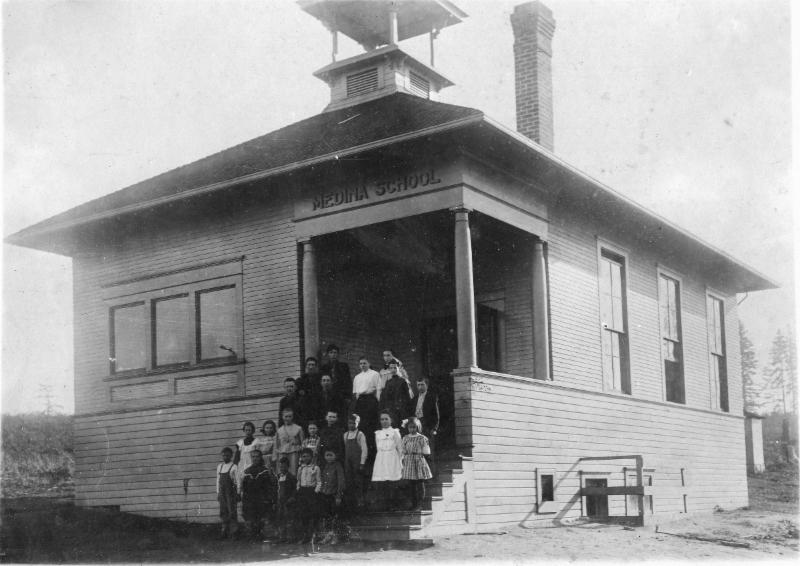
 
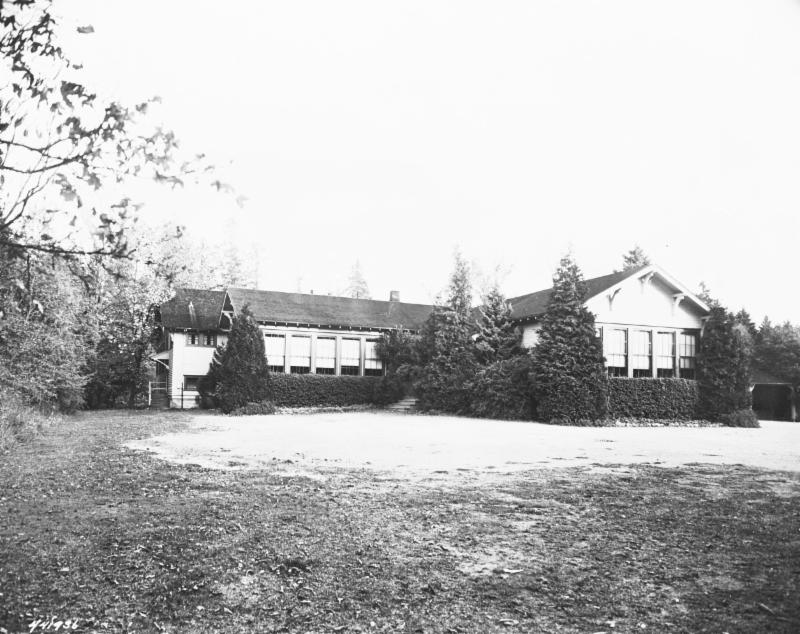
Medina School opened in 1909. At that time, most older children from Medina took the ferry to Garfield High School in Seattle.

Medina School opened in 1909. At that time, most older children from Medina took the ferry to Garfield High School in Seattle.

These communities grew slowly until major change came to the Eastside with the opening of the Mercer Island floating bridge and the post-war housing boom. Kirkland had long been the commercial center of the Eastside, but Bellevue gradually expanded its commercial role and by the 1950s was getting quite built up. Unlike other established Eastside towns—Renton, Issaquah, Kirkland, Redmond, Bothell—Bellevue had never incorporated as a city. It took care of that omission in 1953, creating a new city centered in what is now the downtown area.

Clyde Hill incorporated the same year as Bellevue, but there was little consensus within the rest of the points about their future. The points area was now cut off from the rest of unincorporated King County by Bellevue, Clyde Hill and Houghton (a separate city that merged with Kirkland in 1968). With the prospects of higher density growth and a new floating bridge, residents wanted to control their own planning and zoning.

City government for the points seemed inevitable, but what would that look like? Annexation to Bellevue was certainly an option, and the prevailing “good government” view at the time was that small cities were inefficient and unnecessary. The Bellevue American newspaper and the King County Municipal League argued for annexation to Bellevue, and many points residents agreed.
 
Bay School, located where Hunts Point City Hall stands today, served the points and north Clyde Hill. Older children from Bay School attended Kirkland High School.

Bay School, located where Hunts Point City Hall stands today, served the points and north Clyde Hill. Older children from Bay School attended Kirkland High School.

But, at the same time, each community had its faction that favored incorporation. The points area had long been divided by school district and community club boundaries, and the incorporation movements followed these boundaries, with the Medina Community Club joining forces with the Evergreen Point club.

Pro-annexation residents of Medina applied to join Bellevue, but annexations take time, and the incorporation forces in Medina got on the ballot before the annexation process could be completed. If Medina incorporated, annexation to Bellevue would be impossible for the other points, so in 1955 incorporation measures went on the ballot on the same date in Medina, Hunts Point and Yarrow Point. Medina and Hunts Point voters approved their measures, and it took another four years to get a successful vote in Yarrow Point.

 
Sunnyside Landing provided one of the ferry connections for Yarrow Point. It stood at what is today a public beach access at the foot of NE 42nd Street on Cozy Cove. Ferries serving the points landed at Madison Park in Seattle, allowing commuters to…

Sunnyside Landing provided one of the ferry connections for Yarrow Point. It stood at what is today a public beach access at the foot of NE 42nd Street on Cozy Cove. Ferries serving the points landed at Madison Park in Seattle, allowing commuters to take a streetcar directly to downtown Seattle. (Photo courtesy of Washington State Archives)

It turns out that small cities are not such a bad idea, especially if they have robust tax bases. In the 1950s it became very common across the country for suburban cities to contract for complex services while keeping control of politically important functions like planning. The Points Communities all contract with Bellevue for fire service and Bellevue operates the water and sewer utilities.

Medina provides police protection to Hunts Point and Clyde Hill provides police service to Yarrow Point. All four communities make extensive use of private firms for planning and other technical work.

So there they sit, four fiercely independent cities that certainly appreciate the amenities of the big cities next door, but have no interest in joining them.


Learn more about the Eastside and the Point Communities. Books available from Eastside Heritage Center include:

Lake Washington: The Eastside

Medina

Hunts Point

Bellevue: Its First 100 Years

A Point in Time (Yarrow Point) is out of print but available at the King County Library


Our Mission To steward Eastside history by actively collecting, preserving, and interpreting documents and artifacts, and by promoting public involvement in and appreciation of this heritage through educational programming and community outreach.

Our Vision To be the leading organization that enhances community identity through the preservation and stewardship of the Eastside’s history.

Eastside Heritage Center is supported by 4 Culture

Eastside Heritage Center is supported by 4 Culture

Eastside Stories: Meydenbauer Bay

No. 3 | March 6, 2019

Eastside Stories


Meydenbauer Bay

Subscribe to Eastside Stories by emailing us at: info@eastsideheritagecenter.org

Eastside Stories is our way of sharing Eastside history through the many events, people places and interesting bits of information that we collect at the Eastside Heritage Center. We hope you enjoy these stories and share them with friends and famil…

Eastside Stories is our way of sharing Eastside history through the many events, people places and interesting bits of information that we collect at the Eastside Heritage Center. We hope you enjoy these stories and share them with friends and family.

On March 16, 2019, dignitaries will cut the ribbon on Bellevue’s newest gathering place, the long awaited Meydenbauer Bay Park. This park ties together the old Meydenbauer Beach park with the Bellevue Marina, creating the longest stretch of public waterfront in the city.

Meydenbauer Bay is the birthplace of Bellevue and served as the connection point between the earliest settlers and Seattle. Bellevue’s first commercial district on Main Street was just up the hill, as was Bellevue’s first major school building.

In March of 1869, William Meydenbauer, a German-immigrant baker, rowed across Lake Washington and staked his claim to land on the east end of the bay that would later bear his name. 

 
View from 1908, looking north across the early passenger ferry wharf to the Bellevue School on the hill--at the corner of Main and 100th Avenue today.

View from 1908, looking north across the early passenger ferry wharf to the Bellevue School on the hill--at the corner of Main and 100th Avenue today.

At the time there were no other permanent settlers in the area, and Meydenbauer had no intention of building a permanent residence himself. His cabin was just enough to “prove” his homestead and gain him title to the land. He sold all his holdings before long and later acquired property on Hunts Point.

Families gradually settled the area around the bay. By the 1880s the new steamers on the lake began to call, and a wharf was built at the head of the bay.

The big change came in 1913, when the new vehicle ferry, the Leschi, arrived in Meydenbauer Bay. Although the Leschi would cut the Meydenbauer stop off its itinerary in 1920 (sticking to a Seattle-Medina route) that service was enough to establish Bellevue as the primary settlement in the area.

 
The wharf shown in the first photo was lengthened to accommodate the new car ferry Leschi in 1913. Regular ferry service to Meydenbauer Bay ended in 1920, but excursions to the bay continued into the 1930s. (L85.39.4)

The wharf shown in the first photo was lengthened to accommodate the new car ferry Leschi in 1913. Regular ferry service to Meydenbauer Bay ended in 1920, but excursions to the bay continued into the 1930s. (L85.39.4)

Meydenbauer Bay was also an early destination for revelers from Seattle. In the early 1900s, part of William Meydenbauer’s original homestead was purchased and turned into Wildwood Park, which included a dance hall. Steamers would bring party-goers from Seattle for picnics, dancing and canoe paddling. Wildwood had its ups and downs, hosting roller skating and boxing matches. The dance hall was eventually remodeled into the Meydenbauer Bay Yacht Club, which stands today among Bellevue’s oldest structures.

Perhaps the most curious part of Meydenbauer Bay’s history came in 1919, shortly after the opening of the Lake Washington Ship Canal: the American Pacific Whaling Company.  Although alternatives had been developed for most of the products that came from whales, the industry was still active in Alaskan waters.

 
The American Pacific Whaling fleet gets up steam in preparation for their departure to Alaskan waters. The promoters of the Lake Washington Ship Canal envisioned it giving rise to major industries on Lake Washington. While industry lined the canal a…

The American Pacific Whaling fleet gets up steam in preparation for their departure to Alaskan waters. The promoters of the Lake Washington Ship Canal envisioned it giving rise to major industries on Lake Washington. While industry lined the canal and Lake Union in Seattle, the whaling station at Meydenbauer Bay was one of the few significant industrial concerns to locate on the lake itself.

The fleet of nine boats operated in Alaska during the summer months (no whales were ever brought to Lake Washington). Things were generally pretty quiet during the winter in Meydenbauer, with the mostly Scandinavian whalers living in Ballard. Nonetheless, the American Pacific Whaling Company was the second largest employer on the Eastside at the time, with only the Houghton shipyard having more workers.

Like much of the Alaska fishing fleet, the whalers preferred to be in Puget Sound during the off-season, and the new ship canal offered the bonus opportunity of keeping the vessels in fresh water.

After World War II it became clear that whaling did not have a future as an industry, and the Lagen family closed the business. The dock area was converted to what is now the Bellevue Marina, and two original buildings remain on the site.

The Bay gradually filled in with waterfront homes, leaving few publicly-accessible places. The original Clyde ferry landing at the foot of 92nd Avenue became Clyde Beach, which was later expanded by purchasing the property to the east. In the 1930s a Works Progress Administration (WPA) project converted the ravine between 97th and 98th avenues into Meydenbauer Beach Park, which forms the western boundary of the new park. 

With the new, expanded Meydenbauer Bay Park, the Eastside can return to its roots along this beautiful natural inlet.

The Eastside Heritage Center will participate in the Grand Opening of Meydenbauer Bay Park, Saturday, March 16, from 11:00 a.m. to 2:00 p.m.


Our Mission To steward Eastside history by actively collecting, preserving, and interpreting documents and artifacts, and by promoting public involvement in and appreciation of this heritage through educational programming and community outreach.

Our Vision To be the leading organization that enhances community identity through the preservation and stewardship of the Eastside’s history.


Eastside Heritage Center is supported by 4 Culture

Eastside Heritage Center is supported by 4 Culture

Rolled Textile Racking

Eastside Heritage Center has a collection of 120 oversize textiles, which includes handmade quilts, institutional banners and flags, and other oversize home textiles. This collection has been stored at our off-site storage facility in archival boxes for many years. Folding textiles and storing them in boxes is not an ideal long term storage option. Current industry best practices recommend storing flat textiles rolled onto archival tubes with a tissue paper barrier, when they cannot be stored flat.  

To ensure the long-term safety of the collection, EHC decided to rehouse the textiles. We applied for two grants through 4 Culture to build a rolled textile rack and were awarded funds!

20181220_142239.jpg

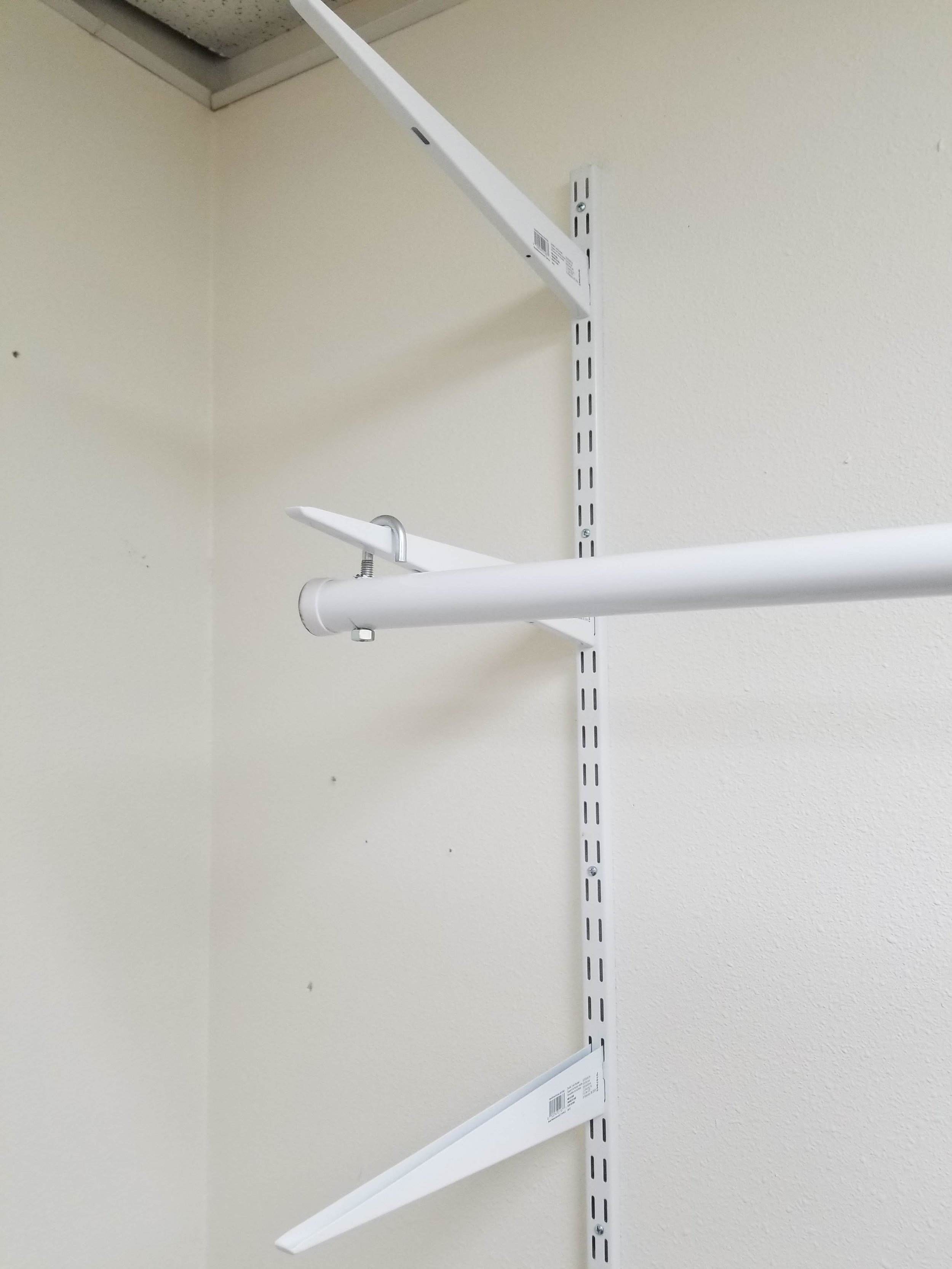
First, our collections staff disassembled and removed the existing shelving unit and prepared the space for installation. We used a low-cost racking option that uses materials you can find at the local hardware store. (Links to the resources we used are at the end of this article) Two terrific volunteers, Steve and Tim, helped install the racking at our storage facility. With the racking prepared, we were able to move on to the rehousing of the quilt collection.

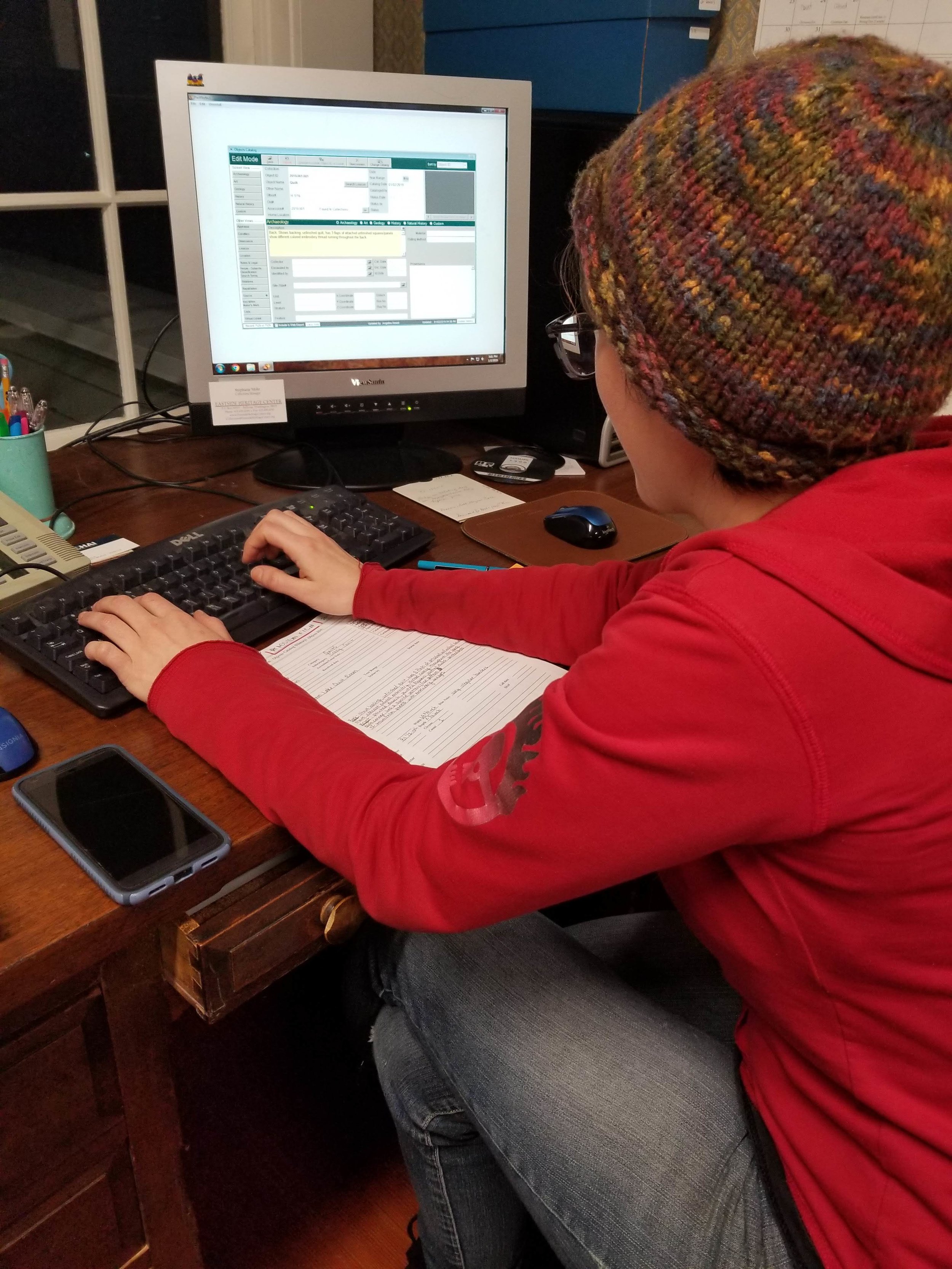
Last fall we hired two interns to help with this project. Under their care, each textile was unfolded, vacuumed and cleaned as necessary, photographed, and its record was updated in our database. Then it was rolled around an archival tube, using methods recommended by the Foundation of the American Institute for Conservation. Once the textiles were rolled and stored on the racks they were tagged with an identification tag. So far, the interns have processed over 50 textiles.

20181222_090843.jpg
20190102_165745.jpg

Suspending the tubes on racking will prevent damage to the textile fibers that can be caused by folding and stacking in boxes. By installing a wall mounted racking system, collections storage space and shelving units will be freed up for storage of other collections items. Each wrapped roll will be tagged with a hanging photo id tag, which will help prevent unnecessary handling. It will be easier for collections staff to monitor the condition of the textiles, identify items for exhibit or research, and safely remove them from storage without having to handle other items in a box or repeatedly fold and unfold a textile.

This, like most collections work, is ongoing. We have successfully filled the existing racking and are making plans for more. Grant funds and private donations are the main way we are able to undertake projects like this one.

This project was funded by 4 Culture.

This project was funded by 4 Culture.

20190223_092612.jpg

Kirkland Steel Mill

Kirkland Steel Mill

L 75.0545Peter Kirk’s Steel Mill, Kirkland. The Great Western Iron and Steel Works on Steel Works Lake (formerly known as Forbes Lake, now known as Lake Kirkland) c.1895

L 75.0545

Peter Kirk’s Steel Mill, Kirkland. The Great Western Iron and Steel Works on Steel Works Lake (formerly known as Forbes Lake, now known as Lake Kirkland) c.1895

According to Peter S Kirk the city that bears his name today, Kirkland, was supposed to be the Pittsburgh of the West in the 1890s.  There were abundant natural resources of iron-ore and limestone locally.  A.A. Denny and other local celebrities had discovered rich iron-ore deposits the 1880s.  The local residents were very supportive of a steel mill because of the prosperity and wealth it would bring to the newly platted town of Kirkland.  So, what happened?

Peter Kirk, from Workington in England, was experienced in iron and steel production and had access to qualified personnel to start a steel mill.  He had also toured through several steel mills in Pittsburgh prior to coming to Seattle.  He had officially incorporated the Moss Bay Iron and Steel Company of America in 1888 and secured $5,000,000 of capital.  This is about $138,000,000 dollars in 2019 dollars and was thought sufficient at the time to start a steel mill.

Sadly, there were a number of factors that conspired against Kirk and other investors to assure the mill would not be built.

First, the year 1893 saw a major downturn, or “panic” in the stock market.  East coast investors suddenly saw their money evaporate.  Kirk had the original money but it was being used up rapidly to purchase equipment for the new mill and he needed more to continue.  It is an expensive proposition to start a new steel mill from scratch.  Money and investors were evaporating in a hurry.

Second, transportation was a major issue.  The plan for the mill was to produce rails for a rapidly expanding west coast railroad building boom.  The finished rails had to be moved from the eastern shore of Lake Washington out into Puget Sound and into the Pacific Ocean.  Though a Lake Washington Ship Canal was being talked about and planned it had not yet been built.  The Montlake Cut was neither discussed nor planned at this time.  Without these two public works projects it would be very difficult and expensive to move the steel out of Lake Washington much less out of the Puget Sound area. 

Another transportation issue not yet solved was the railroad spur to be laid from the iron-ore mines near Snoqualmie to the Rose Hill steel mill site.  Given the nation’s financial woes in 1893, it was not going to get built soon.

The final hurdle to overcome was the high ash content of the nearby Newcastle coal.  High ash content coal is not good for coking coal, a key ingredient in steel manufacture.  Sadly, Peter Kirk did not have a viable backup plan to get the coking coal he needed.

It probably would have been possible to solve one of the aforementioned problems and move on with the steel mill.  However, all the problems combined proved too much to overcome and the steel mill bubble burst, for good.

By Jim - EHC Volunteer 

References/Sources

1.     Bagley, Clarence B, History of Seattle: From the Earliest Settlement to the Present Time.  Volume 2, page 632.

2.     Ely, Arlene, Our Founding Fathers: The Story of Kirkland, 1975, Published by the Kirkland Public Library, Kirkland Washington

3.     Sherrard, William Robert, The Kirkland Steel Mill.  Thesis in partial fulfillment of Master of Business Administration, University of Washington, 1958.

Eastside Stories: Logging the Eastside

No. 2 | February 20, 2019

Eastside Stories

Subscribe to Eastside Stories by emailing us at: info@eastsideheritagecenter.org

Eastside Stories is our way of sharing Eastside history through the many events, people places and interesting bits of information that we collect at the Eastside Heritage Center. We hope you enjoy these stories and share them with friends and famil…

Eastside Stories is our way of sharing Eastside history through the many events, people places and interesting bits of information that we collect at the Eastside Heritage Center. We hope you enjoy these stories and share them with friends and family.

Welcome to Eastside Stories, a new series from the Eastside Heritage Center. Through these periodic postings we will bring Eastside History to life and highlight the people, places, and events that have shaped its remarkable evolution.

Logging the Eastside

When the first intrepid settlers made their way to the Eastside in the 1860s, mostly what they found were trees. Really big trees.

As with so many things in life, this presented both a problem and an opportunity. The problem was that most settlers wanted to do what most Americans did at that time: farm. The Homestead Act of 1862 made land pretty much free for the grabbing, and as the area around the town of Seattle got carved up, settlers headed across and around Lake Washington to stake their claims and start farming. But there were those trees—up to 150 feet tall and several feet across.

The opportunity was to turn those trees into dollars.

 
A crew from the Siler Logging Co. in Redmond cut a large cedar tree. The loggers on the upper left and right are standing on spring boards.(OR/L 79.79.044)

A crew from the Siler Logging Co. in Redmond cut a large cedar tree. The loggers on the upper left and right are standing on spring boards.

(OR/L 79.79.044)

The Puget Sound area had its start as timber country. The first commercial transaction in the new metropolis of Seattle (the Denny Party huddled in a cabin on Alki Point) consisted of the sale of a load of logs to a schooner captain for use as pilings in San Francisco Bay. The rapid growth of San Francisco after the Gold Rush provided a ready market for lumber, shingles, and pilings.

Getting those enormous logs to mills and ships presented a challenge. Water was the answer, and the timber cutters made their way along the many miles of shoreline on Puget Sound, gradually working their way inland. But since Lake Washington still lacked a good connection to Puget Sound, getting Eastside logs to mills was impossible at first. So the earliest Eastside settlers clearing their farms often had no choice but to burn the logs.

 
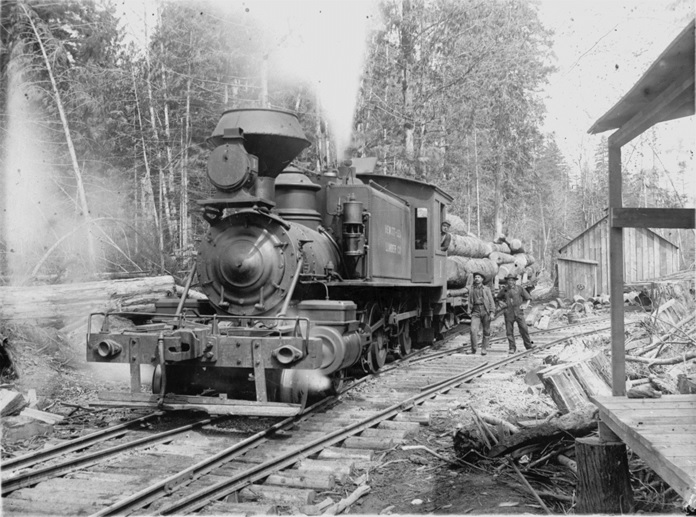
A locomotive belonging to the Hewitt and Lee logging company in Bellevue hauls a load of logs. (2002.147.004)

A locomotive belonging to the Hewitt and Lee logging company in Bellevue hauls a load of logs. (2002.147.004)

Three important changes, beginning in the 1880s, made Eastside logging profitable. First, mills began to spring up along Lake Washington, and then gradually inland. It would always make more sense to ship higher value lumber and shingles than to transport logs, so mills followed the loggers inland. A number of the largest mills were around Lake Sammamish, which was served by early rail lines.

Second, transportation improved. In 1885 a log sluice opened in Montlake, between Lake Washington and Portage Bay. This ditch had a gate at the upper end (Lake Washington was about nine feet higher than Portage Bay at that time) which was opened to let rushing water carry logs to the mills along Lake Union. Railroads began to extend across the Eastside in the 1880s, allowing easier shipping of logs and lumber.

 
Employees at Webber's Shingle Mill on Lake Sammamish. (OR/L 79.79.049)

Employees at Webber's Shingle Mill on Lake Sammamish. (OR/L 79.79.049)

Third, mechanization began to take over. Steam powered donkey engines pulled logs from hillsides and gullies using steel cables known as “wire rope.” Hand saws and axes were replaced with mechanized harvesting equipment. Trucks replaced horses and oxen.

By the 1920s, most of the Eastside had been logged off. Remaining smaller trees that were not worth cutting for timber, and are often seen standing alone in photos of the period, were taken for pulp. As timber was cut and stumps removed, farms spread across the Eastside. Aerial photos from the 1930s show few heavily wooded areas, with most of the Eastside taken up by farms and sparse second-growth forests. 

Today, a sharp-eyed observer can see evidence of early logging. Western Red Cedar rots very slowly, and original stumps can be found in second growth forests around the Eastside. On the sides of many of these stumps, notches for springboards—platforms that allowed loggers to cut above the fat base of the tree--can still be seen. 

Looking at the mature residential areas and dense second growth forests of the Eastside, it can be hard to imagine that 100 years ago most of the Eastside was quite barren. Fortunately those big trees have a way of growing back to provide us with beauty, shade and oxygen.


Our Mission To steward Eastside history by actively collecting, preserving, and interpreting documents and artifacts, and by promoting public involvement in and appreciation of this heritage through educational programming and community outreach.

Our Vision To be the leading organization that enhances community identity through the preservation and stewardship of the Eastside’s history.


Eastside Heritage Center is supported by 4 Culture

Eastside Heritage Center is supported by 4 Culture