Asaichi Tsushima's Book

20210415_144929.jpg
20210415_144848.jpg

At the McDowell House, we keep an ever-growing collection of reference books for use by our volunteers, staff, and outside researchers. In the midst of these tomes, you may come across an unassuming paperback book; a pale gray cover with bold black text that reads:

“Pre-WWII History of Japanese Pioneers in the Clearing and Development of Land in Bellevue by Asaichi Tsushima 1952”

Inside is a treasure trove of knowledge gathered from the Japanese community prior to WWII. Mr. Asaichi Tsushima worked to preserve the memories of Bellevue’s earliest Japanese pioneers for the future. He dedicated the book to the Nisei of Bellevue and sought to show them an honest glimpse into the joys and heartaches of their parents’ generation.

The Japanese immigrants, your parents, courageously and tenaciously struggled and persevered against horrendous odds, clearing the acres and acres of virgin forest land for agricultural and residential use, and I believe the Isseis made significant contributions to the community’s rapid growth.
— Asaichi Tsushima

There are hand-drawn maps of the farms worked by the Japanese community, photos of the Clubhouse dedication, and chapters covering things like the Life of the Farmers and Education and Religion. Perhaps most importantly, Mr. Tsushima lists, by name and home prefecture, all the early Japanese pioneers. He includes as much biographical information he had for each one up to WWII and after incarceration. This has been a tremendous resource for EHC and other local community organizations researching the families and community that built Bellevue.

The book was translated in 1991 by Harriet (Yamagishi) Mihara, Alan Hideo and Chiye (Ito) Yabuki, and Rose (Yabuki) Matsushita. EHC is lucky to have multiple copies of this little book in our collection and we keep one available for research purposes.

20210415_144818.jpg

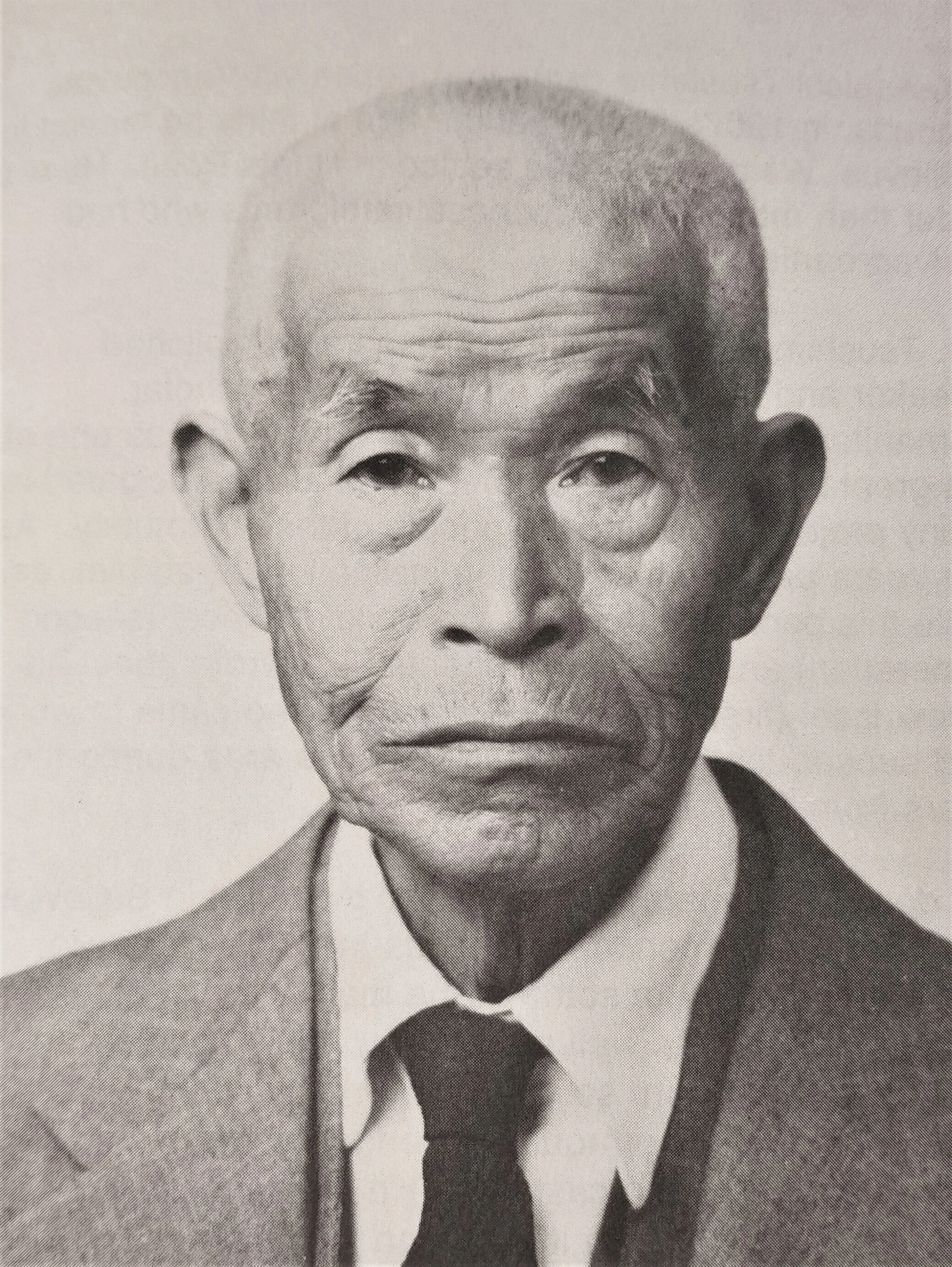
Asaichi Tsushima arrived in Bellevue in 1908 at the age of twenty from Okayama-ken, Japan. He worked on a farm as a laborer in the strawberry fields until the manager, Mr. Hirayama moved to Seattle in 1910. From there, he worked in an apple orchard and as a gardener for white neighbors while living in a tent on Clyde Hill.

Through an arranged marriage, his wife Nami Tsushima came from Japan to join him in 1912. Nami worked as a domestic worker for some of the wealthy families on Hunts Point.

Asaichi leased a small tract on Hunts Point in 1917. The family grew vegetables and sold them to other families nearby. Around the same time, the Tsushimas farmed property at Fairweather Bay with the Mizokawa and Muromoto families.

The Japanese community was growing rapidly at that time and so was the need for education for their children, the Nisei. A language school was established in 1921, but was forced to close. Anti-Japanese propaganda made claims that these Nisei children were being forced to swear loyalty to Japan and it’s emperor. Those suspicions have since proved to be false, but they were effective in stoking racist fears in Bellevue.

A second language school opened in 1925 and held classes in a Downey Hill Issei home until the community organized for a school building in Medina in 1929. Mr. Tsushima was the first teacher. In 1930, the Japanese Community Clubhouse was built and the two schools consolidated there. Language lessons were initially only offered on Saturdays, but later they would be offered every day for an hour after school.

In the early morning hours of December 8, 1941, three Bellevue Japanese community leaders were taken from their homes by the FBI. Asaichi Tsushima was one of them. Due to his popularity as a public speaker and his close ties to the language school, Mr. Tsushima was considered a security threat following the bombing of Pearl Harbor. He would spend the majority of the war years at a prison camp in New Mexico.

In 1942, Nami Tsushima and their daughter Michi were evacuated to Pinedale and Tule Lake, then to Minidoka. The Tsushima family returned to Bellevue in 1946. Mr. Tsushima worked on his book by taking down the remembrances of the Issei generation. He finished the book in 1952 and there was a limited publishing. He made special note to request the book never be sold.

Asaichi Tsushima returned to his birthplace in Japan and lived there until his death in 1969.


Resources

Tsushima, Asaichi. Pre-WWII History of Japanese Pioneers in the Clearing and Development of Land in Bellevue. 1952.

Neiwert, David A. Strawberry Days: How Internment Destroyed a Japanese American Community. Palgrave Macmillan, 2005.

A History of Snoqualmie Pass: Tourists, Recreationists, and Environmentalists

Eastside Stories is our way of sharing Eastside history through the many events, people places and interesting bits of information that we collect at the Eastside Heritage Center. We hope you enjoy these stories and share them with friends and famil…

Eastside Stories is our way of sharing Eastside history through the many events, people places and interesting bits of information that we collect at the Eastside Heritage Center. We hope you enjoy these stories and share them with friends and family.

By Angeline Nesbit

The creation of the highway through Snoqualmie Pass has a history of over 6,000 years starting with the first indigenous peoples who traveled it on foot. That history continues to be made as we expand and change the highway to be more efficient, stable, and safe for travelers. Conquering the geographic elements which once were considered too formidable a barrier for people to cross regularly, people now engage in many recreational activities in the surrounding area of the pass.

Opening this space for hikers, hunters, and tourists also has its own history. Preserving the forests and history around the pass is an environmental concern which has attracted several projects and land purchases. Converting spaces that were apart of historical industries and routes through the mountains into places for recreation is the next step in human interest in the Snoqualmie Pass area.

An early project embarked on by the Boy Scouts of America and the Forest Service before the 1980s was to hack away the brush and open part to the wagon road built in 1868. They preserved what was left of some of the early trail for hikers to enjoy. This 1-mile stretch was the original foot and horse trail of Native Americans which was widened to a wagon road. This trail can be accessed near Denny Creek Campground.

Encouraging more hikers, in September 1994 the Snoqualmie tunnel built by Milwaukee Road railways 80 years before, opened to hikers and mountain bikers. The Milwaukee Road railways were some of the first electrified trains which traveled westward through their own protected tunnels. The tunnel was built with the help of 2,500 men whose labor, along with blasting materials, broke through 12,000 feet of solid rock. Two teams met in the middle to complete the large project. Massive wooden doors protect the entrance to the tunnel which railroad employees stood by to open for approaching trains. This kept icicles from forming in the very cold and damp tunnel. A cold wind emits from the tunnel strong enough to rustle clothing. The Snoqualmie Tunnel is the longest hiking tunnel in the US at 2.3 miles long. It runs over the county line between King and Kittitas counties, creating a link in the Iron Horse Trail to the west and Hyak trail to the east.

A few years later, in a huge land deal the company known as Weyerhaeuser sold over 100,000 acres of forested land they used as a tree farm to a trust which guaranteed it’ preservation permanently. This was a $185 million-dollar deal with the Evergreen Forest Trust, who has long been attempting the protection of the land. “Evergreen Forest” at Snoqualmie was acquired in 2002. At the time it was already being used by recreationalists with a fee to the Weyerhaeuser company. This site is home to old growth trees and rich wildlife making it an ideal recreation area.

Surrounded by national parks, including Mount Baker National Forest, Mount Rainier National Park, and Okanagan-Wenatchee National Forest the land around Snoqualmie Pass is beautifully preserved. Despite the many people who speed through each year the Cascades remain a haven of natural beauty which inspires people to slow down and enjoy the view. Next time you travel the pass leave time to stop and enjoy the natural world which surrounds this human made structure.

Photo (above): On a motor trip to Snoqualmie Summit this photograph shows group of people standing in front of cars, in front of long buildings.

Photo (above): On a motor trip to Snoqualmie Summit this photograph shows group of people standing in front of cars, in front of long buildings.


Resources

Eastside Heritage Center Archives

“Snoqualmie Pass: From Indian Trail to Interstate” by Yvonne Prater

A History of Snoqualmie: Transportation Across the Cascades

Eastside Stories is our way of sharing Eastside history through the many events, people places and interesting bits of information that we collect at the Eastside Heritage Center. We hope you enjoy these stories and share them with friends and famil…

Eastside Stories is our way of sharing Eastside history through the many events, people places and interesting bits of information that we collect at the Eastside Heritage Center. We hope you enjoy these stories and share them with friends and family.

By Angeline Nesbit

The Snoqualmie Pass road project was first conceptualized in the 1840s, but construction of the road stopped and started with the political and economic concerns of the region and country. The road didn’t reach a point where it resembled a real highway until about 1895. Constructed with Cedar planks to help keep the road even and drivable, cars began to travel the route although often having to adapt to weather changes quickly.

Automobiles are just the most recent form of travel through the Cascades though. Native Americans walked across the mountains for thousands of years before a large road was cut out. Using a slightly different route than Snoqualmie Pass follows today, indigenous peoples were able to maintain trade routes between east and west. With the introduction of the horse these routes were even more readily traveled. Today one mile of the original route, which also laid groundwork for European colonizer’s eventual road, is preserved near Denny’s creek.

Early European and American settlers came in wagons and on horseback as well across the route, but they remained partial to travel by water until the road began to be more established in the late 1800s. Still freight wagons bringing goods out west used the road readily. In 1909 the Alaska-Yukon Exposition created a reason to improve the road as people flocked to attend the event.

Photo (above): Men with car on Snoqualmie Pass highway, probably near North Bend, taken in 1916.

Photo (above): Men with car on Snoqualmie Pass highway, probably near North Bend, taken in 1916.

This along with automobiles and tourists are sometimes credited with the final push to create a truly viable pass at Snoqualmie. US route 10, Sunset highway opened in 1915, a greatly improved road to allow easy travel for motorists. Still, the road was often perilous, and motorists were sometimes inclined to park their cars on railway flatbeds and take the train through the pass in inclement weather.

The Milwaukee Road was one of these railways. Building railroads and tunnels through the pass they transported goods, people, and other items. Milwaukee Road used some of the first electrified trains which traveled westward through their own protected tunnels to speed travel. Their train, The Olympian, was the first passenger train to go through the Snoqualmie tunnel in January 1915.

Dramatic changes in transportation are a part of what has shaped the Eastside. Without roads like the Snoqualmie Pass highway (known as I-90) our region of eastern King County would find travel to the east extremely difficult. Developing the road to allow for the safe travel of cars and trucks made the large community we live in today possible.

Resources

Eastside Heritage Center Archives

Anna Clise and the Seattle Children's Hospital

L 88.40.01 - James and Anna Clise, with dog Toby, at Willowmoor.

L 88.40.01 - James and Anna Clise, with dog Toby, at Willowmoor.

Anna and James Clise had lost their son, Willis, to juvenile arthritis in 1898. At that time, there were no hospitals in the Seattle area to treat children. In her grief, Anna sought a way to ease the suffering of other mothers and children. After visiting Dr. John Musser at Philadelphia Orthopedic in 1906, Anna was moved to action. In 1907, she organized a group of 23 other wealthy Seattle women to establish a hospital of their own.

Anna was elected the first President of the Board of Trustees of Children’s Orthopedic Hospital Association. They started with a seven bed ward in Seattle General Hospital and had an all-female board. In their first year, the Association was approached by the Dorcas Society about a 14-year-old black girl with tuberculosis of the knee. When asked if they would help her, the Association pledged to accept any child, regardless of race, religion, or the parents’ ability to pay. That year the doctors of the ward treated 13 children and performed 7 operations.

The Clise’s owned the property that is today known as Marymoor Park, in Redmond. There they hosted many lavish parties to help fund this new hospital. Guests were met at the ferry dock with a four-horse tallyho and transported to the 350 acre estate. Anna’s daughter Ruth recalled, “Gaily colored Japanese lanterns holding lighted candles were strung between the trees in the garden and down to the river, where their reflections created a romantic setting. The large rooms of the house and the spacious verandas provided ample room for dancing, the music drifting out over the garden.”

As word spread about the work they were doing, the Association quickly outgrew the ward at Seattle General. In 1908, they opened the “Fresh Air Cottage” on Queen Anne Hill with 12 beds. In 1911, they built an even larger 50-bed hospital next door. The hospital remained there until 1953, when it moved to its current location in the Laurelhurst neighborhood.

By 1917, Anna had lost her eyesight to glaucoma and the couple decided to retire to their property in California. She maintained an interest in the Children’s hospital throughout her remaining years and her daughter and granddaughter served as trustees. Anna died of cancer in 1936.


Anna Clise was included in the Washington State Centennial Hall of Honor in 1989.


To learn more about the Clise family and their Willowmoor estate, visit our latest online exhibit: Willowmoor.


Resources

"The Washington State Centennial Hall of Honor." Columbia Magazine. 3.2 (Summer 1989): 36­39. http://columbia.washingtonhistory.org/magazine/articles/1989/0289/0289­‐a2.aspx.

Woman's Place: a Guide to Seattle and King County History, by Mildred Tanner Andrews, Gemil Press, 1994, pp. 154–155.

Johnston, Helen, and Richard Johnston. Willowmoor: the Story of Marymoor Park. King County Historical Association, 1976.

Dirigo Compass

2006.27.02a Dirigo Compass, Trademark Dirigo/E. M. Sherman Seattle, Wash.

2006.27.02a Dirigo Compass, Trademark Dirigo/E. M. Sherman Seattle, Wash.

Maritime recreation and industry have shaped the communities on the Eastern shores of Lake Washington. One example of Bellevue’s maritime history is the Dirigo Compass Factory.

In the collection, EHC hosts a Dirigo Compass. This is an example of a mariner's compass. It consists of a pivoting needle on a pin inside a mahogany box. A “wind rose” is attached to the needle, which indicates the direction of the wind.

Dirigo, the state motto of Maine, translates to “I Direct” from Latin.


In 1911, Eugene and Alice Sherman moved to Bellevue from New England. At the time, Bellevue’s business district consisted of a grocery store, a post office, and a blacksmith shop. The Shermans soon added a fourth business, the Dirigo Compass Factory, on the corner of 100th Ave and NE 1st. The factory had 2 stories and machinery took up the lower floor.

1994.02BHS.03 Eugene Sherman

1994.02BHS.03 Eugene Sherman

1994.02BHS.01 Alice Sherman

1994.02BHS.01 Alice Sherman

Eugene was also a boatbuilder. In 1923, his launch pulled three vessels at the Bellevue dock away from danger when the ship next to them caught fire.

Alice was responsible for Bellevue’s music scene. A skilled violinist, she taught, performed, and organized musical events throughout the greater Bellevue area. Eugene shared his wife’s love of music. After he retired from the compass factory in 1944, he devoted his time to making violins.


Resources:

Eastside Heritage Center Archives